
OnlyFans Fans Behavior 101
There is a real science about parasocial relationships, and almost no one has applied it to OnlyFans fans yet. This post is an introduction to the social and behavioral science of those one-sided bonds, and a working framework for understanding and predicting fan behavior on the platform — who pays, who churns, and what chatters can do about it.

Why behavior beats content
Most "OnlyFans growth" content is about the supply side: lighting, posting cadence, captions, funnels. That's table stakes. The real leverage on LTV is on the demand side — understanding the fan as a behavioral system, not as a wallet attached to a username.
Three principles will repeat through every section below:
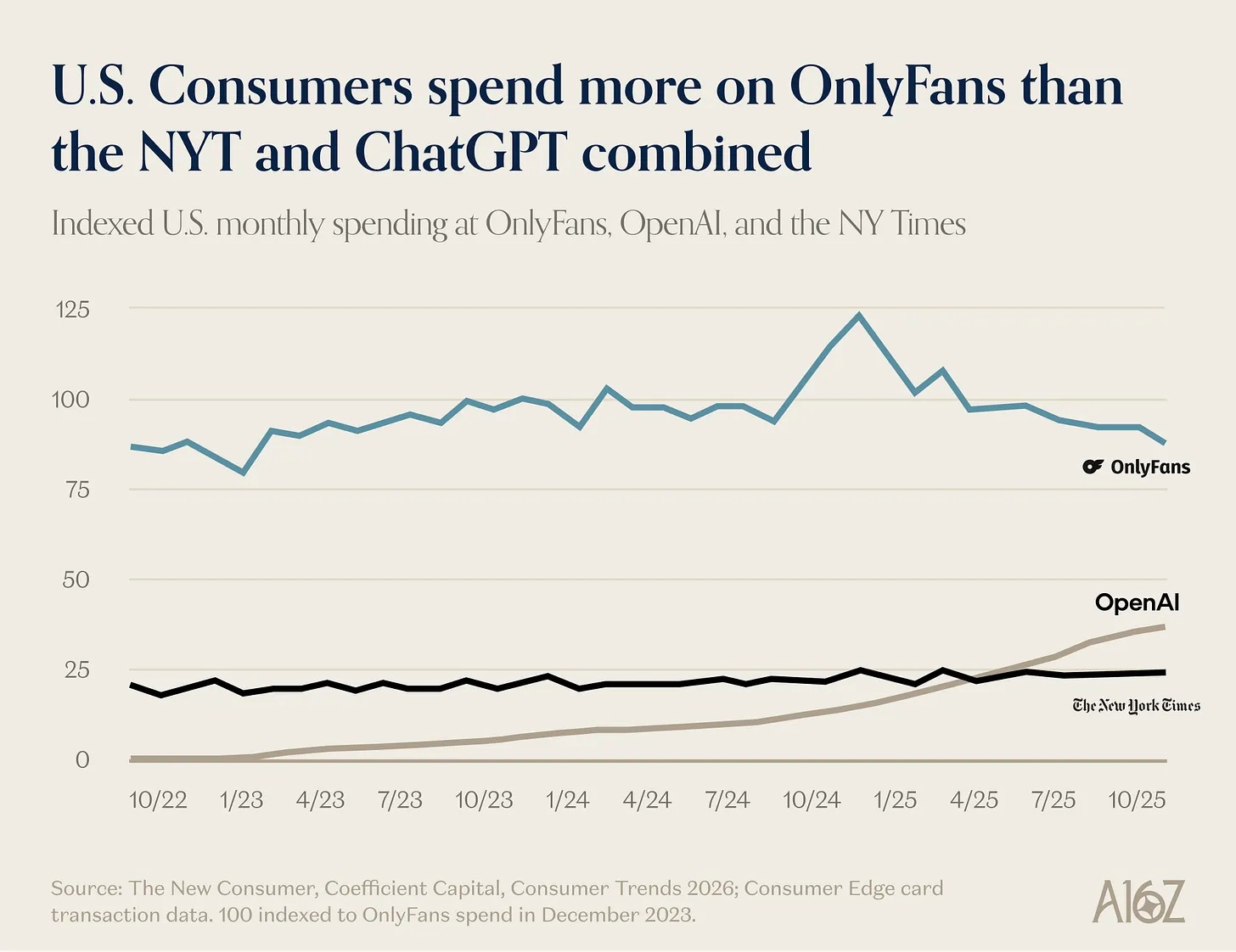
- Revenue is not evenly distributed. A tiny minority of fans pays for the lights.
- The product is the feeling, not the file. Fans buy continuity and recognition; the photo or video is the artifact that delivers them.
- Behavior is observable. Latency, reply length, and callback engagement are measurable signals — most teams just don't look at them.
1. The four archetypes that drive 80% of revenue
Across thousands of fan dossiers we keep seeing the same four behavioral patterns. Names vary by agency, but the shape is consistent. None of these are personality types in a clinical sense — they are spending and interaction patterns, and a single fan can drift between them over months.
The Whale
- Revenue share: often 40–60% of a model's monthly take, from less than 2% of subscribers.
- Behavior: pays full PPV price without negotiation, tips on birthdays and holidays, asks for custom content with specific parameters, expects to be remembered.
- What kills them: a broken callback ("you said you'd send me X"), being treated like a stranger after spending four figures, persona breaks that make them feel the relationship is fake.
The Grinder
- Revenue share: 20–30%, from the steady middle of the subscriber list.
- Behavior: buys mid-tier PPVs ($15–40) consistently, on a predictable rhythm — payday, weekend, or right after a story drop. Rarely tips unprompted, but reliable.
- What kills them: price creep (a $45 PPV when the last six were $25), feeling like just another wallet, the model going quiet for more than five days.
The Window Shopper
- Revenue share: 5–10% — surprising upside if you handle them right, near-zero if you don't.
- Behavior: subscribes during a promo, talks a lot, opens every message, but defers every PPV with "later," "next week," "after payday." Some convert. Most don't.
- What kills them: being ignored (they need warmth), or being pushed too hard too early — the "third PPV in a row" pattern is the most common death.
The Ghost
- Revenue share: near zero — but they're 50–70% of your subscriber list.
- Behavior: subscribed, never opened a DM, never replied. Auto-renews until they don't.
- What to do: a single warm re-engagement message at day 7 and again at day 25. Past that, respect the silence — burning chatter hours on Ghosts is the #1 hidden cost in most agencies.
2. The parasocial loop is the product
Fans are not buying photos. They're buying the feeling that this specific creator knows them, thinks about them, and is excited when they show up. Every transaction sits on top of that feeling. Break the feeling and the transactions stop — even if the content is identical.
"He remembered I had surgery in March. He asked how my dog was. That's why I tipped $200 on the next post." — real Whale debrief, paraphrased.
The loop has four beats: recognition ("he's here again, hi by name"), continuity ("last time we talked about your trip"), anticipation ("I was thinking about you when I shot this"), and reward (the PPV, the custom, the voice note). Skip any beat for too long and the fan starts to feel the seams.

Where the research actually comes from
Parasocial relationships were first formally described by Horton and Wohl in 1956, studying how television audiences related to news anchors. Six decades and several media revolutions later, the same mechanics power livestreams, podcasts, and — yes — OnlyFans DMs. What changed is the direction: the medium now talks back. That two-way illusion is exactly what makes paid messaging on OF so much stickier than passive content subscriptions.
3. Spending rhythms are real, and they're individual
The biggest mistake junior chatters make is treating PPV pricing as a property of the content. It isn't. Price is a property of the fan. The same 45-second clip should be $12 to one fan and $80 to another, because their willingness-to-pay is different — and changes over the month.
Three patterns we see repeatedly:
- Payday spikes (1st and 15th in the US). Whales and Grinders spend 2–3× the daily average on paydays. Saving the big PPV for payday is one of the highest-leverage habits a chatter can build.
- Friday/Saturday late-night windows (10pm–2am local). Open rates are highest, but so is drunk-buying remorse the next morning. Refund-prone fans need a softer hand.
- Post-payout collapse. Many Whales spend hard for 7–10 days, then go quiet for 14–20. Treating the quiet period as churn is the most common false alarm.
4. The silent churn signals
Fans rarely tell you they're about to leave. They show you. The signals are subtle and they're nearly always there 7–14 days before the unsubscribe.
- Reply latency doubles. A fan who used to reply in 6 minutes now takes 4 hours. Not because they're busy — because they're losing interest.
- Message length collapses. Multi-sentence replies become "haha," "nice," "ok."
- PPV opens but no purchase. They're still curious. They're not convinced.
- No reaction to a callback. You reference something they told you and they don't engage. Continuity has broken on their side.
The good news: all four are reversible if caught early. A well-timed voice note, a tiny free clip, or a "I was thinking about what you said about [X]" message restores the loop in most cases. The bad news: most chat teams don't track latency or callbacks per fan, so they miss the window.
5. What chat teams can actually do
This is the part most "OnlyFans growth" content skips. Knowing the patterns is cheap. Operating against them is the work. A short checklist by archetype:
| Archetype | Daily move | Weekly move | What to never do |
|---|---|---|---|
| Whale | Open with a callback. Always. | One unprompted, content-free check-in. | Forget a promise. Treat them generically. |
| Grinder | Hold price discipline. Don't discount. | One mid-tier PPV aligned to their rhythm. | Stack three PPVs in a week. |
| Window Shopper | Warmth, not offers. Build the loop. | One low-friction ask ($5–10) to test conversion. | Push a $40 PPV in the first week. |
| Ghost | Nothing. | One re-engagement at day 7 and day 25. Stop. | Spend chatter hours chasing. |
6. Three myths worth retiring
- "Whales are just rich guys."
- Some are. Many aren't. The defining trait is emotional investment, not income — a $40k/year fan can outspend a $400k/year fan over twelve months if the loop is intact.
- "More PPVs = more revenue."
- True up to a sharply diminishing return. Past 2–3 PPVs per week per fan, conversion drops and so does retention. The agencies that compound send fewer, better-priced PPVs.
- "Personalization doesn't scale."
- It didn't, before persistent memory and per-fan dossiers. It does now. That's the entire bet behind tools like Onlik — turning a senior chatter's instinct into a system the night shift can run.
The takeaway
OnlyFans is not a content business. It's a relationship business with content as the artifact. Fans behave in patterns that are predictable once you're looking for them — but invisible if your team is treating every fan like the same wallet with a different username.
The agencies that compound are the ones that turn "the senior chatter just knows" into a system the night shift can run. That's the entire reason Onlik exists — to keep the parasocial loop intact across every chatter, every shift, every fan. If you want to see what that looks like in practice, the companion post on senior-chatter judgment is the next read.